Last updated: 2026-08-15
Signs of hearing loss rarely show up as a single dramatic moment — they build slowly, through small adjustments you make without noticing: the TV volume creeping up a notch every few months, the habit of angling your "good ear" toward whoever is speaking, the restaurant conversations that have quietly become exhausting instead of enjoyable. Because the changes are gradual, most people wait years longer than they should before getting a hearing test, often only after a spouse, adult child, or coworker points out that something has shifted. This guide walks through the earliest behavioral signs, the risk factors that make them more likely, and the point at which a home workaround should turn into an appointment with an audiologist.

Dr. Jennifer Walsh is a Doctor of Audiology with 14 years of clinical practice fitting hearing aids and diagnosing adult hearing loss. Read more about our testing methodology or view full bio.
The first symptoms of hearing loss are almost never "I can't hear." They're behavioral adaptations that feel like personality quirks rather than medical signs. The most common one I see in clinic is volume creep: a patient's family reports that the television has gotten progressively louder over one or two years, to the point where it's uncomfortable for everyone else in the room. The person experiencing the loss usually hasn't noticed the change at all, because it happened in small increments that their brain adjusted to along the way.
A second early sign is asking people to repeat themselves — not occasionally, but as a recurring pattern across different speakers and settings. If you find yourself saying "what?" or "sorry, come again?" multiple times a day, especially with people whose voices are naturally softer or higher-pitched, that's worth paying attention to. High-frequency hearing loss, which is the most common pattern in age-related and noise-induced hearing loss, tends to affect consonant sounds like "s," "f," "t," and "th" before it affects vowels. That means speech can sound present but unclear — you hear that someone is talking, but the words blur together, particularly for women's and children's voices, which sit higher in pitch.
Another subtle sign is a growing reliance on lip-reading or visual cues without realizing you're doing it. People with early hearing loss often report that they understand conversations much better face-to-face than on the phone or from another room, because they're unconsciously filling in gaps by watching mouths and facial expressions.
Difficulty understanding speech in background noise is usually the earliest and most telling sign of all, and it often shows up years before someone struggles in a quiet one-on-one conversation. Restaurants, parties, family gatherings, and open-plan offices become disproportionately draining. You can hear that people are talking, but separating one voice from the clatter of dishes, overlapping conversations, and music becomes a real effort. Audiologists call this a problem with "speech-in-noise" understanding, and it happens because the inner ear structures responsible for filtering out competing sound are often the first to be affected by age-related and noise-related damage, even while your ability to hear a quiet room seems mostly normal.
This is exactly why so many people with measurable hearing loss say "my hearing is fine, I just have a hard time in loud places." That statement is frequently a hearing-loss symptom in disguise, not a separate problem. If you've started avoiding restaurants, sitting out of group conversations at parties, or feeling unusually fatigued after a few hours in a noisy environment, it's a strong enough pattern to bring up with a professional rather than write off as normal aging or simple distraction.
Beyond conversation difficulty, a handful of other everyday signs are worth tracking. Struggling to hear on the phone, especially with certain callers, is common because phone audio strips out many of the visual cues that help you compensate in person. Difficulty hearing high-pitched sounds — a doorbell, a microwave beep, birds outside — can indicate high-frequency loss even when normal conversational speech still seems fine. Tinnitus, a ringing, buzzing, or hissing sound with no external source, frequently accompanies hearing loss, though it can also occur on its own; we cover the distinct causes and management options in a dedicated guide on tinnitus.
Family and friends are often the ones who notice first. If someone close to you has mentioned, even in passing, that you seem to miss things they say, that you talk louder than you used to, or that you turn the TV up to a level that bothers everyone else, take that feedback seriously rather than defensively. Hearing loss is one of the few health conditions where the people around you can often detect it before you can, simply because your brain is very good at compensating for a gradual loss you're living inside of.
Social withdrawal is a less obvious but important sign. Some people quietly stop attending group events, family dinners, or activities they used to enjoy, not because their interests have changed but because straining to follow conversation has become tiring or embarrassing. If this sounds familiar, it's worth considering whether hearing difficulty — rather than mood or preference — is driving the change.
| Sign You Notice | What It May Indicate |
|---|---|
| Turning the TV volume up over months or years | Gradual, likely age-related or noise-related hearing loss |
| Struggling to follow conversation in restaurants or parties | Reduced speech-in-noise understanding, often an early sign |
| Frequently asking people to repeat themselves | High-frequency hearing loss affecting consonant clarity |
| Understanding better in person than on the phone | Reliance on lip-reading/visual cues to compensate |
| Ringing, buzzing, or hissing with no outside source | Tinnitus, sometimes alongside hearing loss, sometimes independent |
| Sudden hearing loss in one ear, or loss after an ear infection | Possible medical emergency or conductive blockage — see a doctor promptly |
| Hearing loss with dizziness or ear pain | Possible medical condition unrelated to typical age-related loss — needs evaluation |
Age is the single biggest risk factor for hearing loss; the structures inside the inner ear, particularly the tiny hair cells that convert sound vibrations into nerve signals, naturally decline over decades of use and don't regenerate once damaged. But age isn't the only driver, and knowing your other risk factors can help you decide how proactive to be about screening.
Cumulative noise exposure is the other major factor, and it's the one most within your control. Years of concerts, motorcycle riding, power tools, firearms, or a loud workplace add up, even if no single event felt damaging at the time. If you've spent years around loud recreational or occupational noise without hearing protection, your risk is meaningfully higher than someone with the same age but a quieter history — we go deeper on protecting against this in our guide to safe listening volumes and hearing damage, and in our roundup of earplugs for concerts and loud venues.
Certain medications, called ototoxic drugs, can also affect hearing, including some chemotherapy agents, certain antibiotics, and very high doses of aspirin. Family history matters too — if hearing loss runs in your family, particularly if it appeared at a relatively young age in a parent or sibling, your own risk rises. Chronic health conditions like diabetes and cardiovascular disease are associated with higher rates of hearing loss, likely because they affect blood flow to the sensitive structures of the inner ear. Frequent ear infections, especially untreated ones in childhood, and a history of head trauma round out the list of factors worth mentioning to a hearing professional when you get evaluated.
Many people manage mild hearing difficulty for years with home workarounds: closed captions, a louder TV, sitting closer at meetings, or simply avoiding noisy venues. These aren't wrong things to do, but they're signs that your hearing has changed, not a substitute for finding out why. If you've quietly started restructuring your life — picking quieter restaurants, avoiding phone calls in favor of texting, sitting in the front row at events you used to enjoy from anywhere — that's a reasonable point to stop self-managing and get an actual measurement of what's happening.
It's also worth trying a screening tool as a first step. Online and app-based hearing screeners can flag whether your hearing falls outside a typical range and are a reasonable way to decide if a professional visit is warranted, though they have real limitations compared to a full clinical test; we explain exactly what these tools can and can't tell you in our guide to online hearing test accuracy. A positive flag on a screener, or a strong pattern of the behavioral signs above, is enough reason to book a proper evaluation rather than wait for things to get more obviously bad.
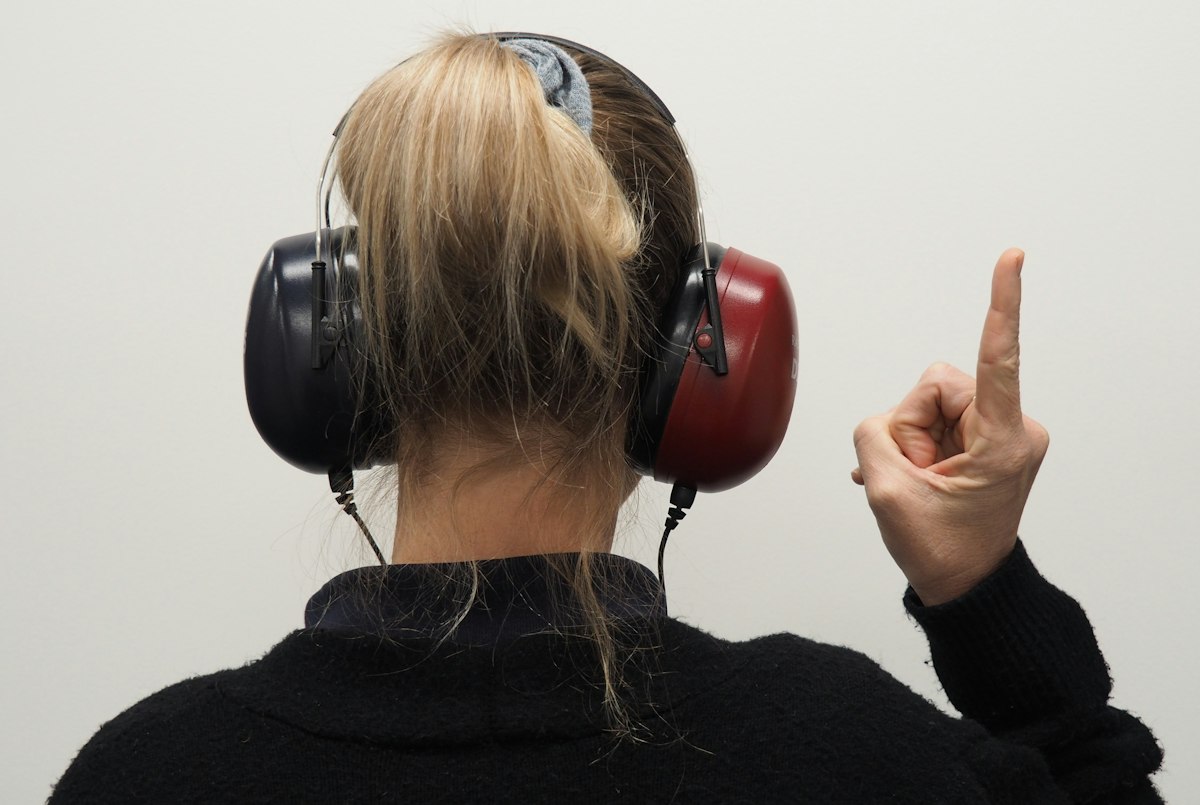
A full audiometric evaluation is painless and takes well under an hour. An audiologist will typically start by looking in your ears with an otoscope to rule out simple, fixable causes like earwax buildup or an ear infection — these can mimic hearing loss symptoms but are resolved easily once identified. From there, you'll usually sit in a sound-treated booth and respond to a series of tones and words at different volumes and pitches through headphones, which maps out your hearing threshold across the frequency range that matters for speech. Some evaluations also include speech-in-noise testing, which more closely mirrors the restaurant-and-party difficulty many people report as their main complaint.
The results come back as an audiogram, a chart showing exactly which pitches and volumes you can and can't hear well in each ear. This is genuinely useful information even if it turns out your hearing is normal, because it becomes a baseline you can compare future tests against. If the audiogram does show hearing loss, the audiologist will discuss options based on the type and severity, which today range from over-the-counter hearing aids for mild-to-moderate loss — covered in our roundup of the best OTC hearing aids — to prescription devices fitted and programmed specifically to your audiogram.
Yes, and sudden hearing loss — especially in one ear over the course of hours or days — is different from the gradual, age-related pattern described above. Sudden sensorineural hearing loss is considered a medical emergency because early treatment with corticosteroids improves the odds of recovery. If you experience sudden hearing loss, seek medical care within 24 to 48 hours rather than waiting to see if it resolves on its own.
Age-related hearing loss, called presbycusis, is extremely common and affects a large share of adults by their 60s and 70s, so in a statistical sense it is "normal." That doesn't mean it should be left unaddressed — untreated hearing loss is associated with faster cognitive decline, higher fall risk, and social isolation, so common doesn't mean harmless.
In most cases, no. You can typically schedule directly with an audiologist or hearing instrument specialist, and many offer baseline screenings at low or no cost. A referral becomes relevant if your test results point to a medical cause that needs further evaluation, such as a possible growth on the auditory nerve or a middle-ear condition requiring an ENT specialist.
It depends on the cause. Hearing loss from earwax blockage, fluid, or certain infections often resolves once the underlying issue is treated. Sensorineural hearing loss, caused by damage to the inner ear's hair cells from age or noise exposure, is generally permanent, but it's very effectively managed with hearing aids, which is why an accurate diagnosis matters more than trying to guess the cause yourself.
Hearing loss almost always announces itself quietly, through small behavioral shifts long before it becomes an obvious problem you can't work around. Turning up the volume, dreading noisy restaurants, and constantly asking people to repeat themselves are not personality traits or normal parts of getting older to simply tolerate — they're signals worth acting on. If two or more of the signs covered here sound familiar, especially in combination with risk factors like significant noise exposure or a family history of hearing loss, the most useful next step is a proper audiometric evaluation rather than another year of quietly adapting around the problem. Catching hearing loss early gives you far more options, and far better outcomes, than waiting until it's unmistakable.
Independent testing. No manufacturer pays for placement on this site.